Cambridge South Station (Water Main Replacement)
Location: Cambridge South Station
Duration: 26 August 2025 – 6 February 2026 (5 months)
Overview
The Cambridge South Station Water Main Replacement project formed a critical part of the wider Cambridge South Station development, which aims to improve transport links and access to Addenbrooke’s Hospital. The works focused on replacing an existing strategic water main that was affected by major railway infrastructure upgrades.
Project Background
As part of the Cambridge South Station development, the railway layout was expanded from two tracks to four. This expansion meant the existing water main was no longer adequately protected beneath the revised track formation. To ensure long-term resilience and compliance with infrastructure requirements, a full replacement and realignment of the water main was required.
Project Aim
The objective of the project was to replace approximately 40 metres of a 600mm cast iron water main. Of this length, around 30 metres ran through a protective duct beneath existing rail tracks. The scope included the installation of new ducted twin 450mm PE water mains beneath both the two existing rail lines and two newly constructed main lines connecting King’s Lynn to King’s Cross.
Project Highlights
The project delivered a number of notable outcomes, including:
• Successful completion of slip-lining and pipe installation works in line with the agreed programme
• High-quality, seamless connections achieved through the use of precision-engineered components
• Strong collaboration between on-site teams and the Principal Contractor.
Works Undertaken
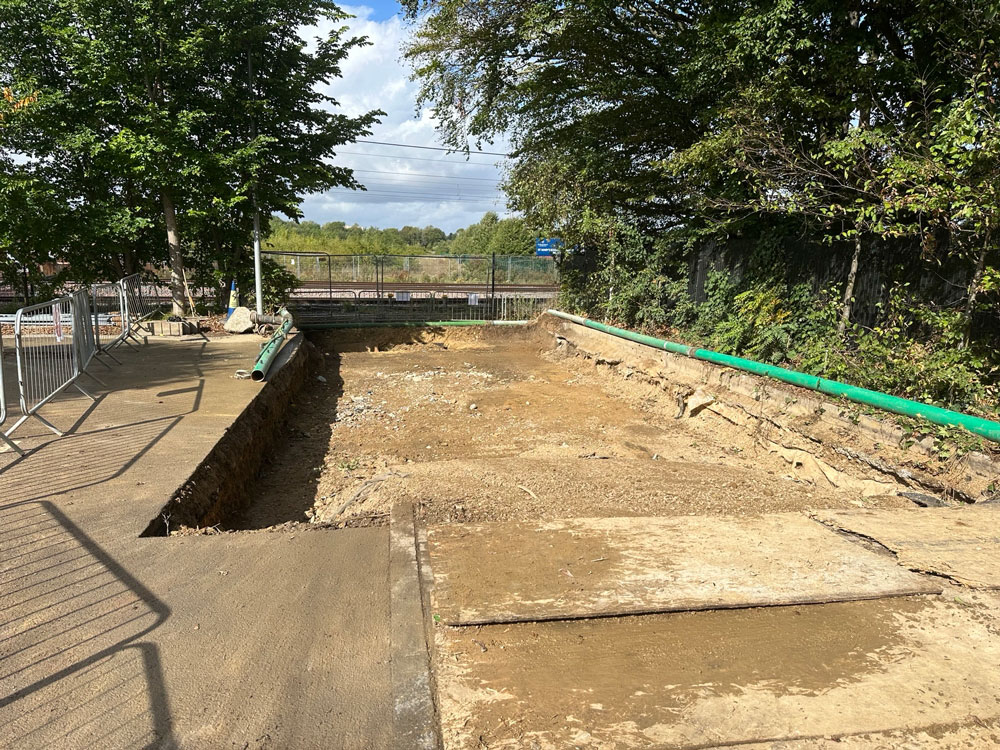
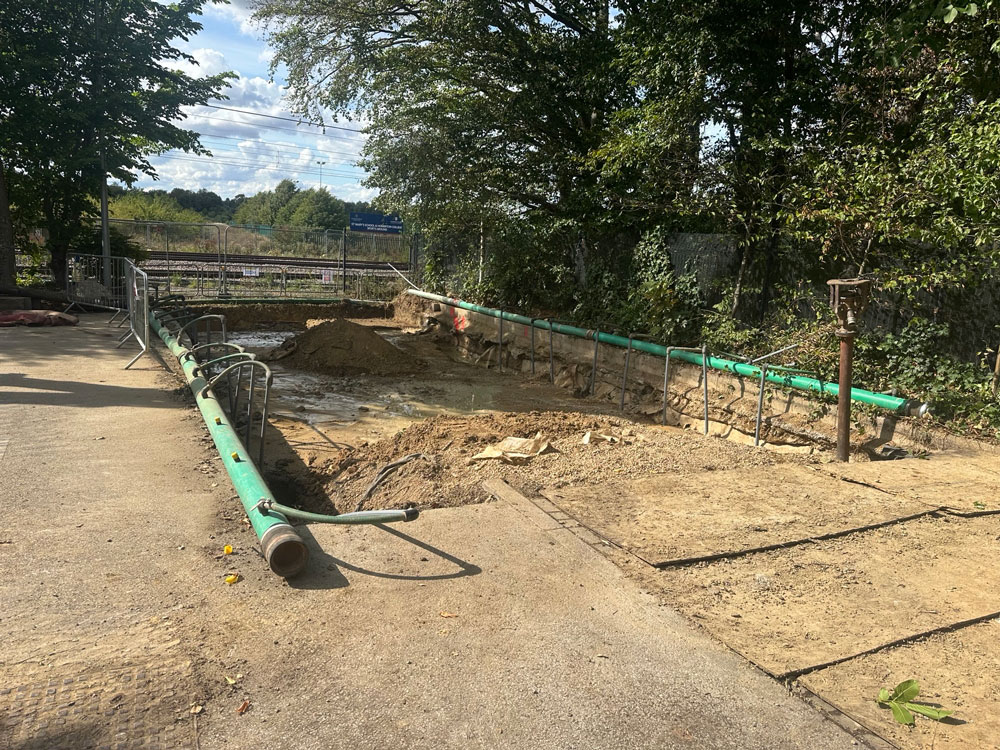
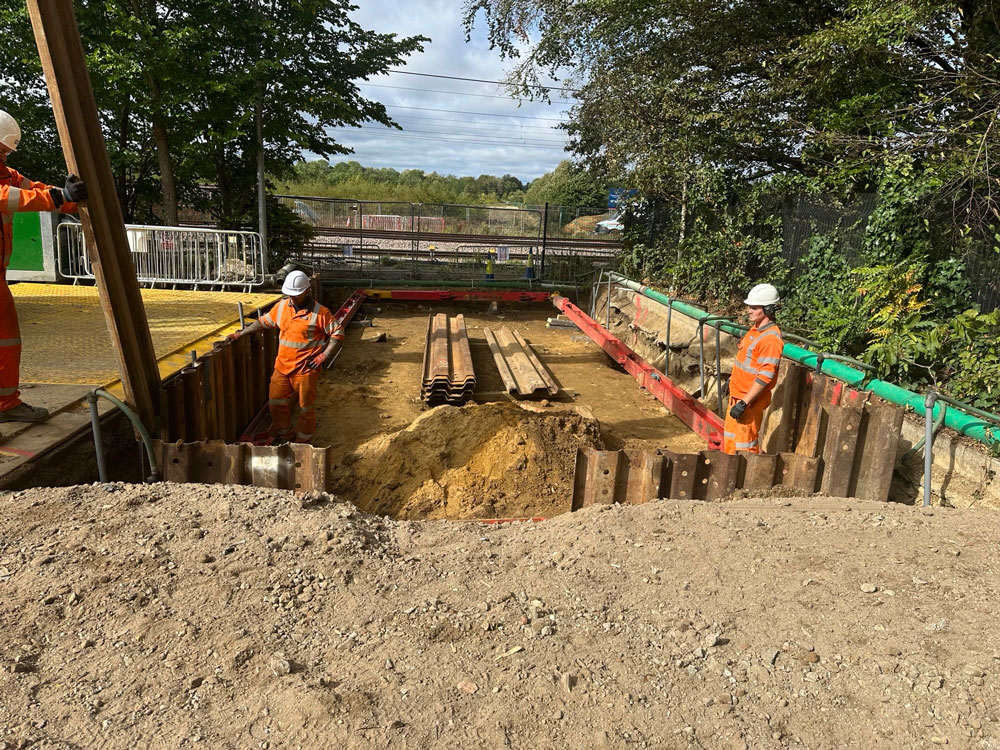
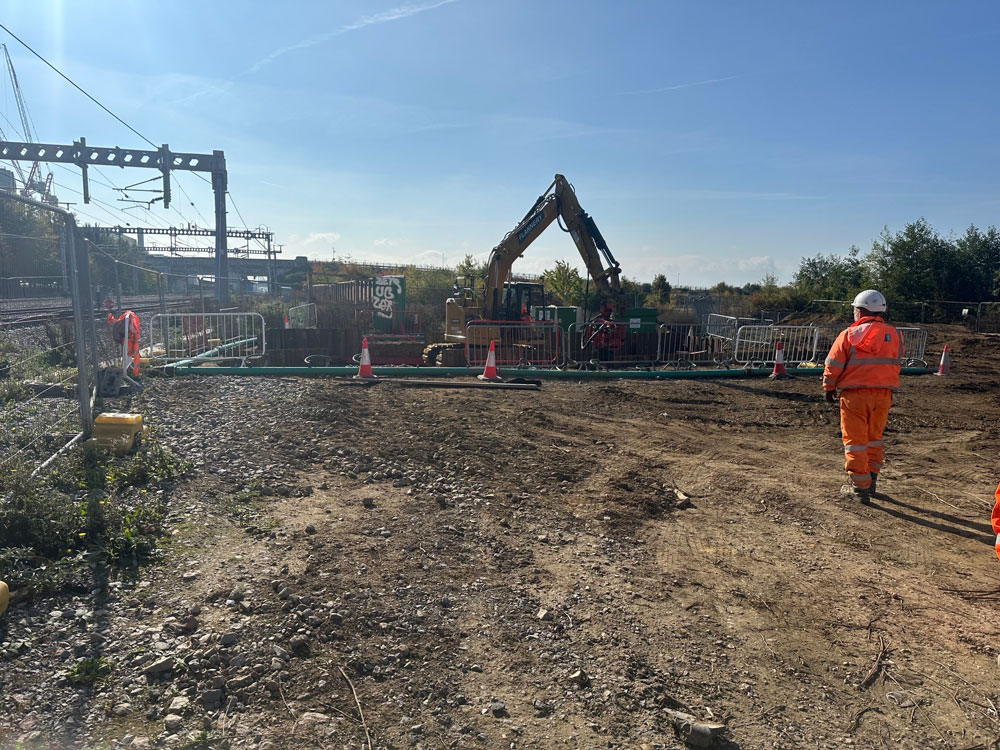
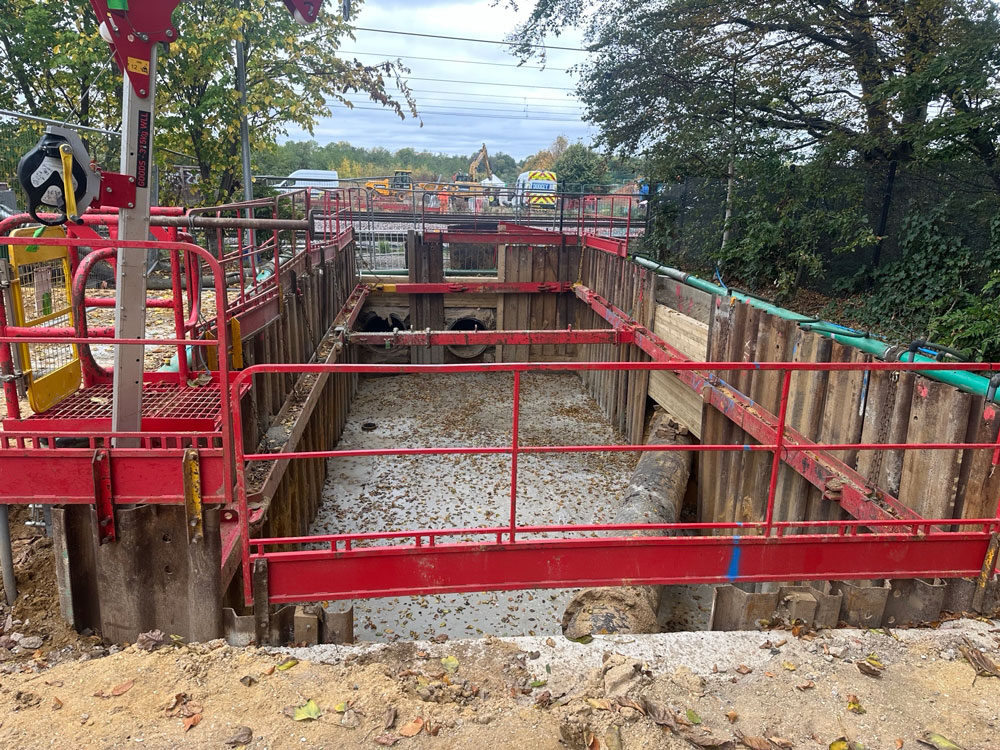
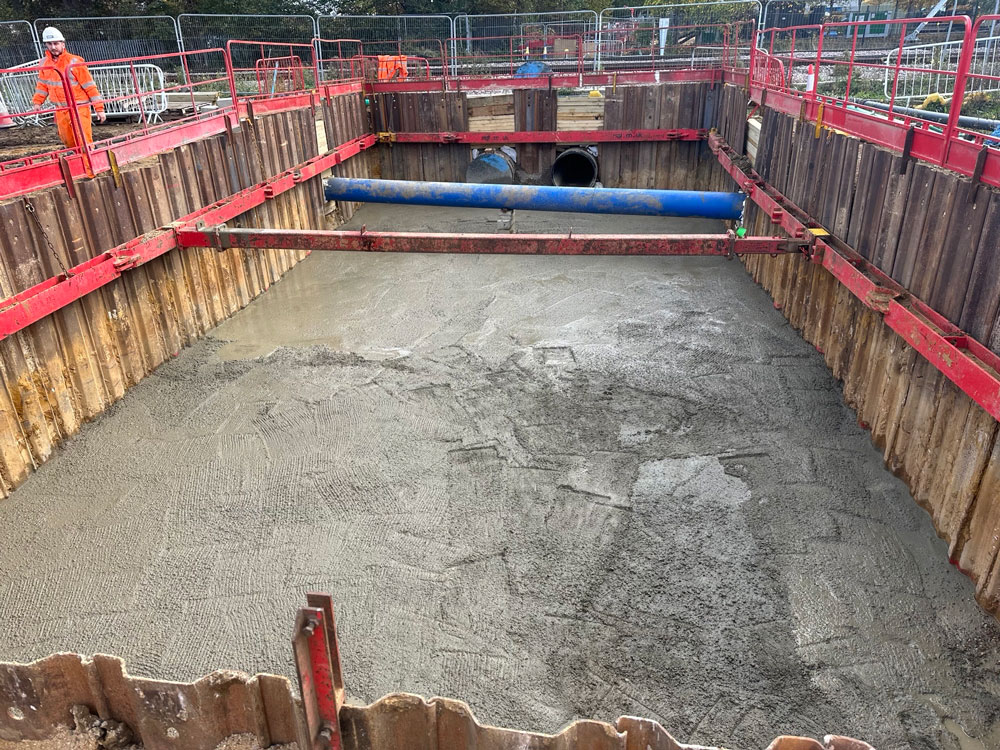
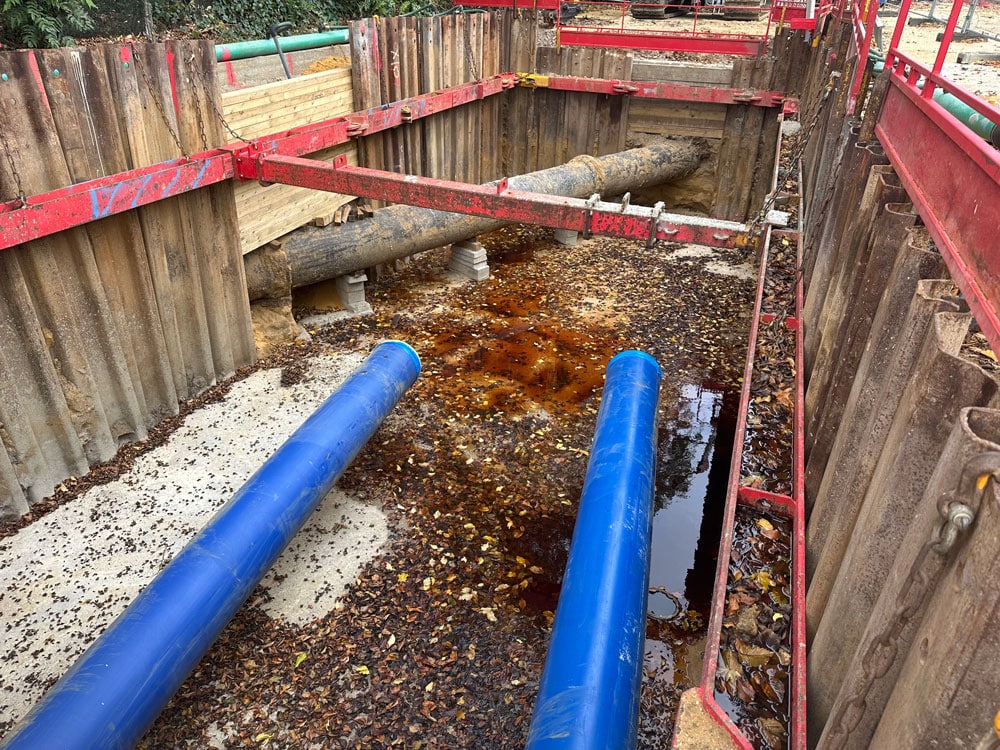
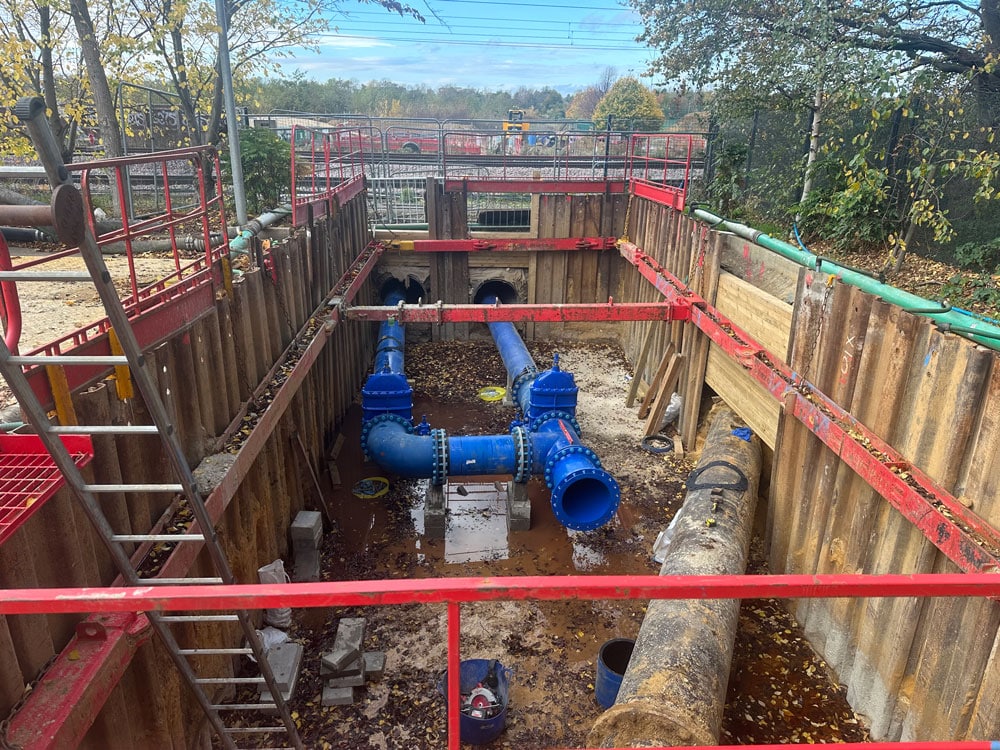
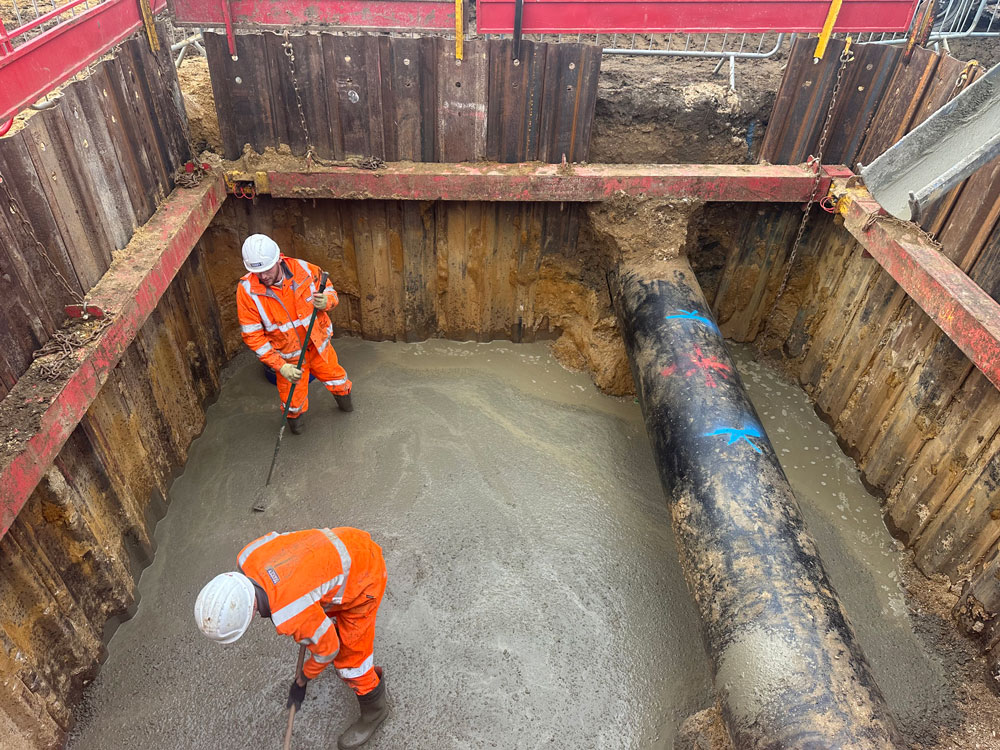
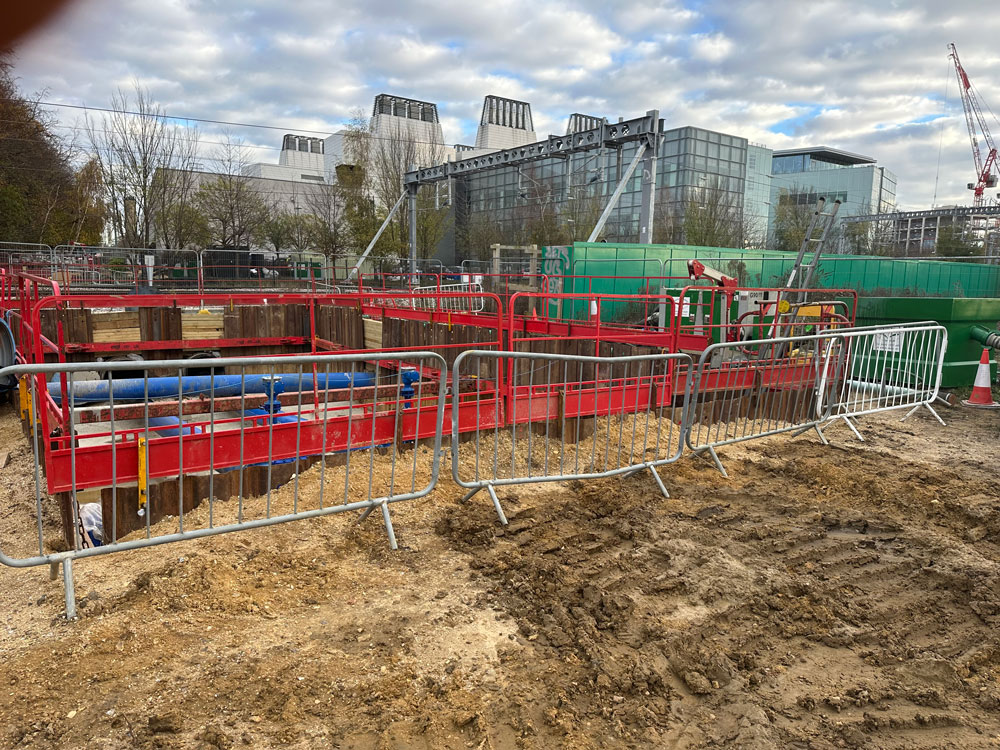
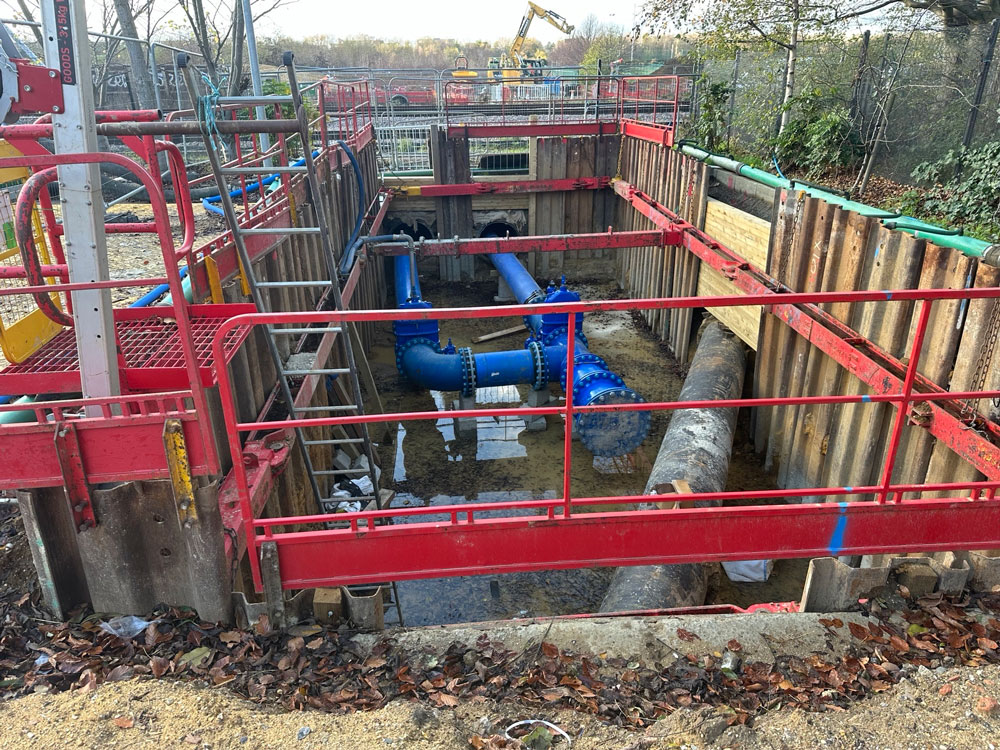
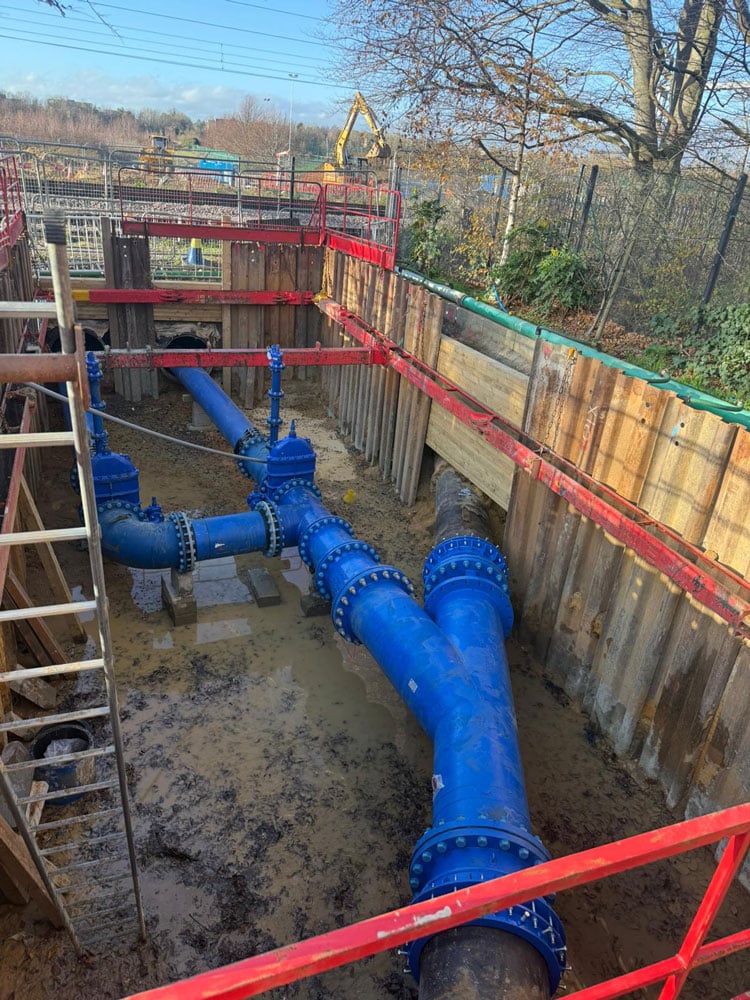
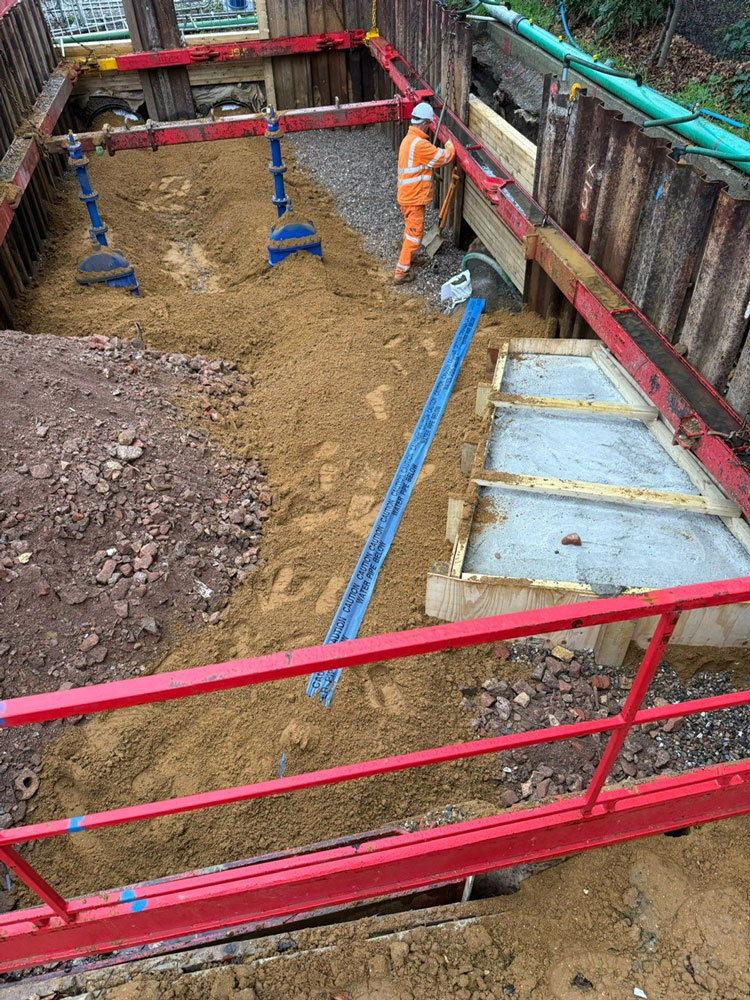
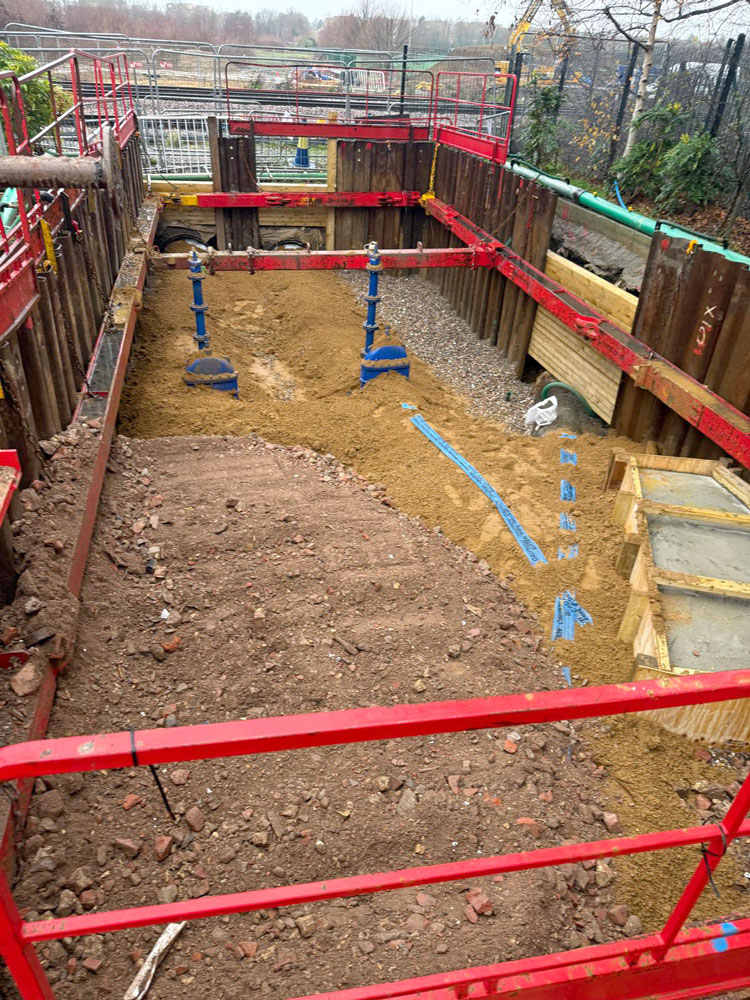
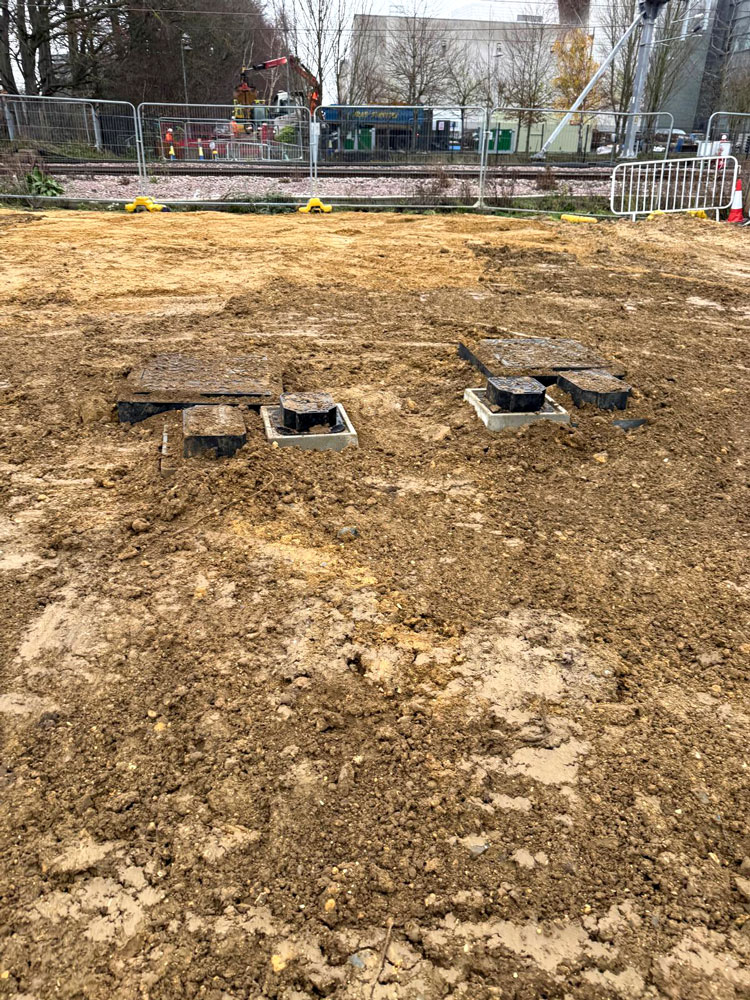
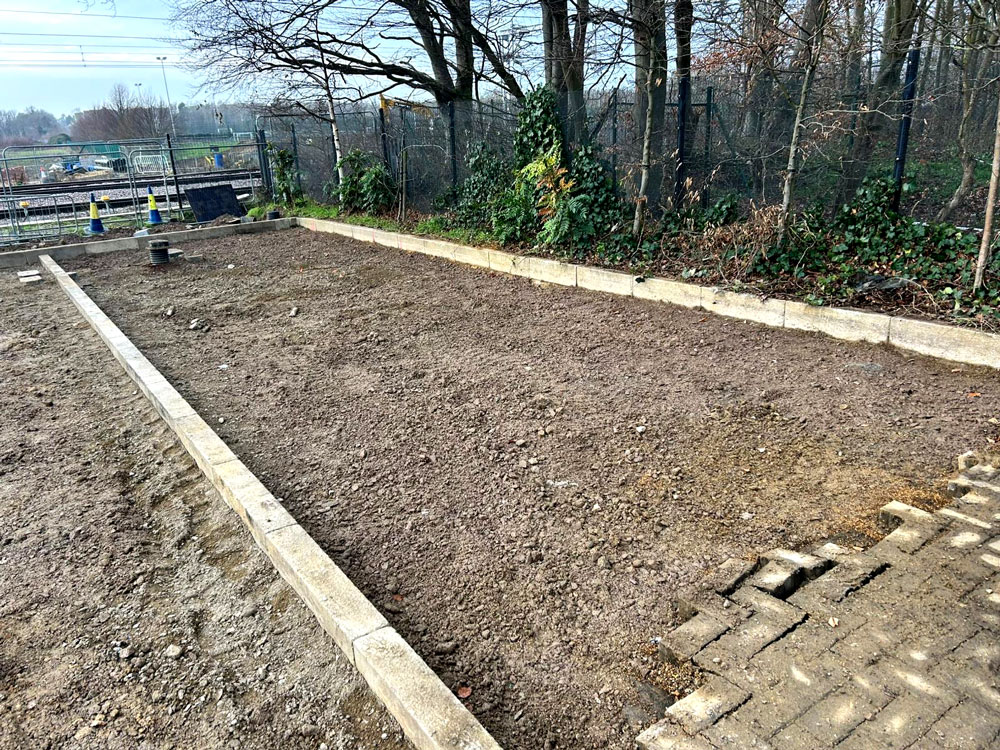
Two 900mm ducts were installed beneath both the existing and new rail tracks by the principal contractor, Murphy’s. At each end of the ducts, large excavations were constructed to facilitate installation and connection works. The east excavation measured 13 metres by 5 metres with a depth of 3.1 metres, while the west excavation measured 16 metres by 8 metres with a depth of 2.35 metres.
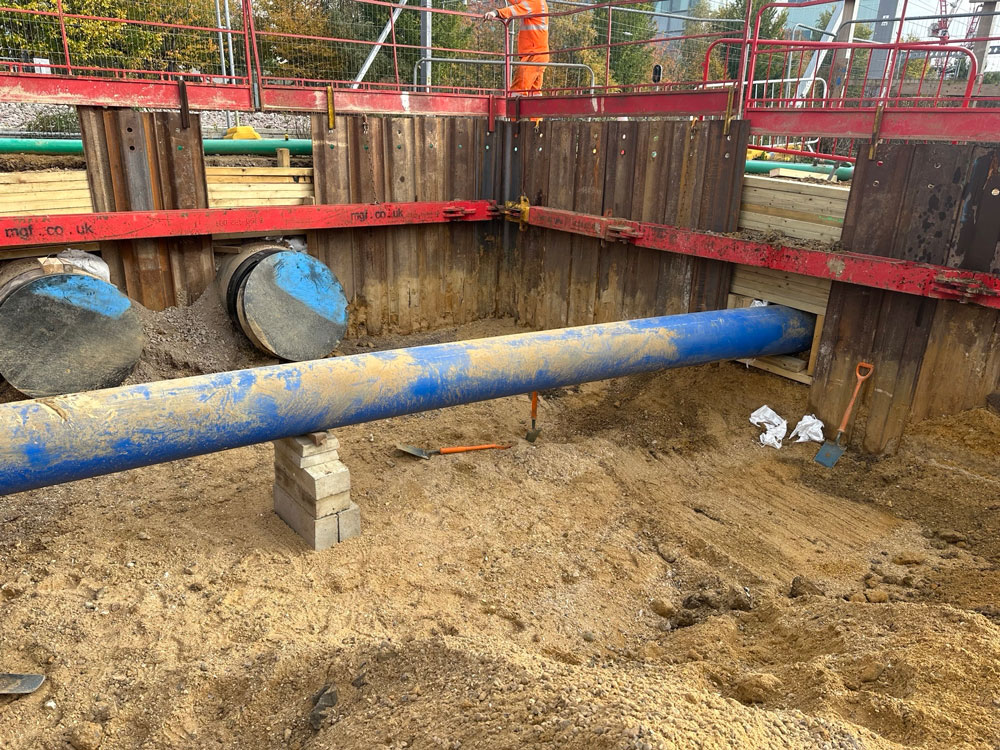
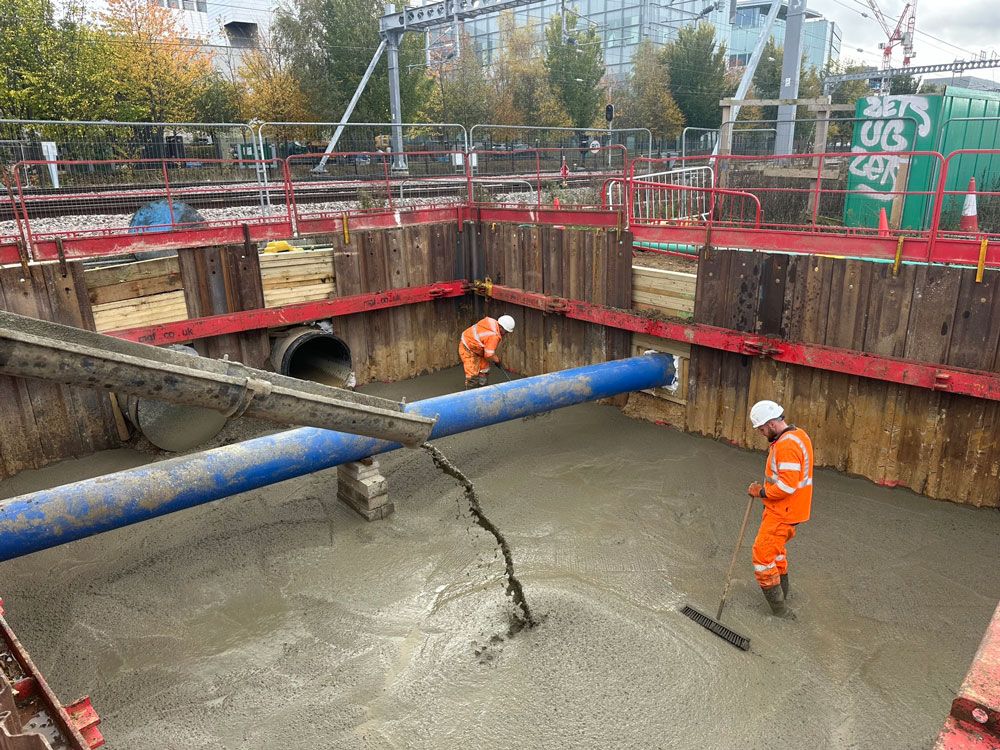
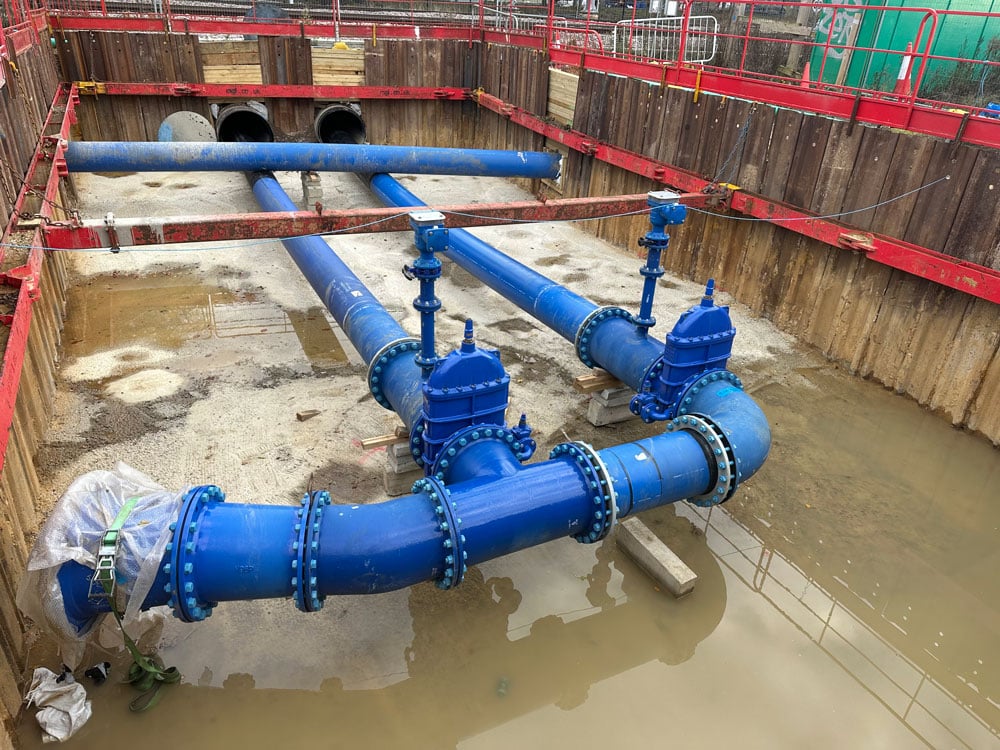
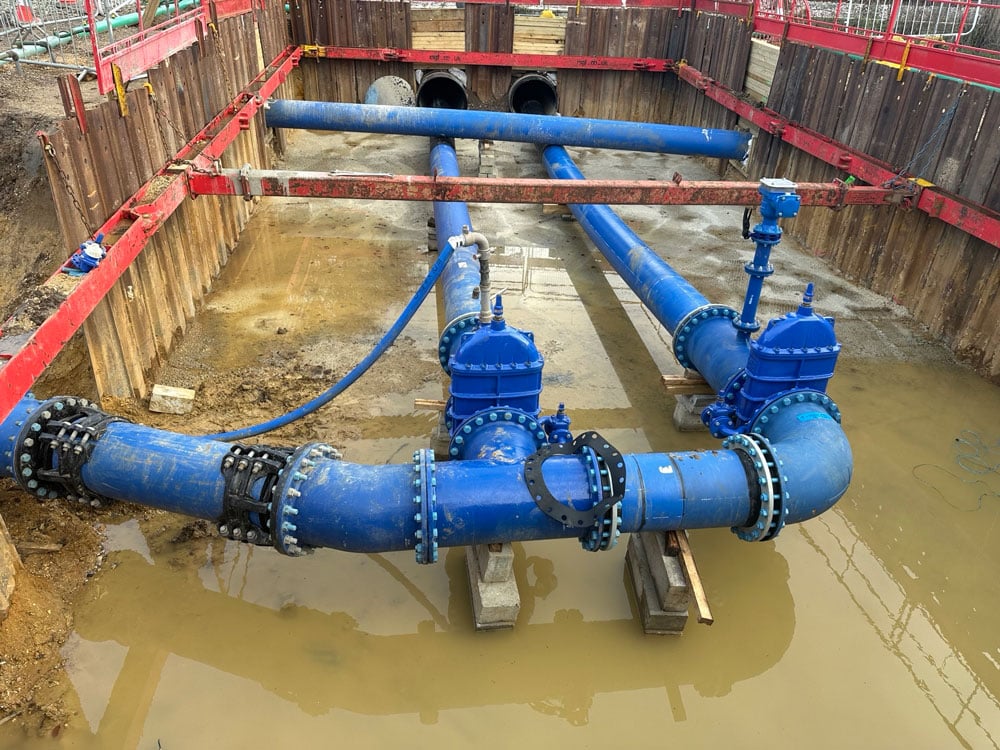
Temporary works were designed and installed to provide structural support within these excavations. The ducts were then slip-lined, each containing approximately 35 metres of butt-fused 450mm PE pipe.
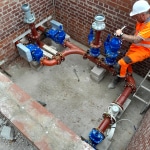
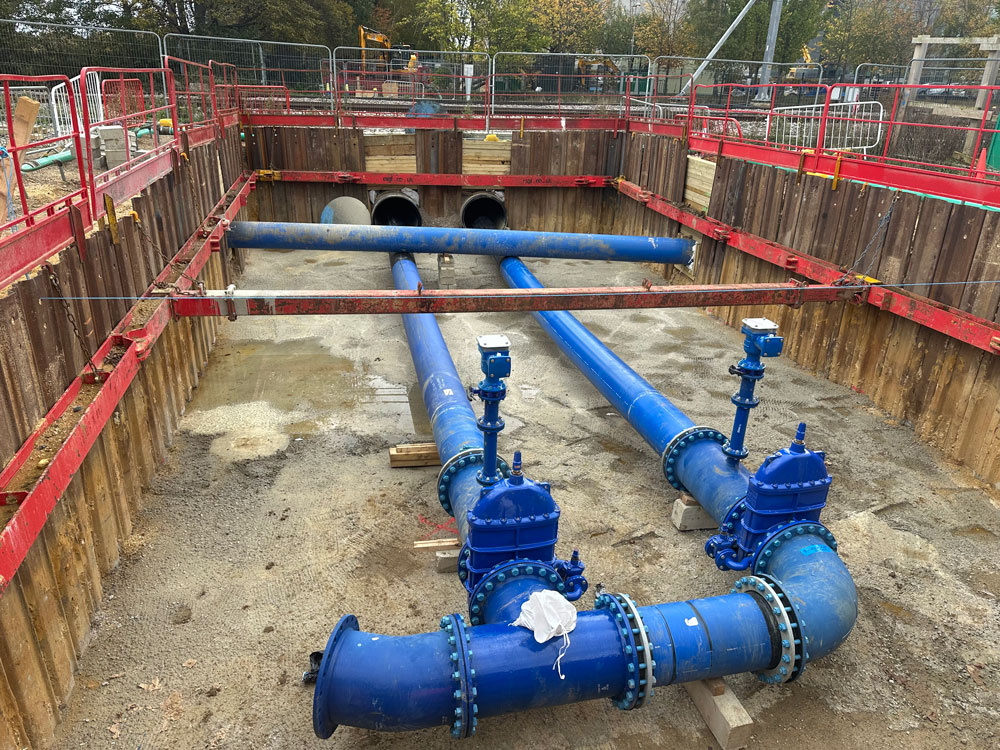
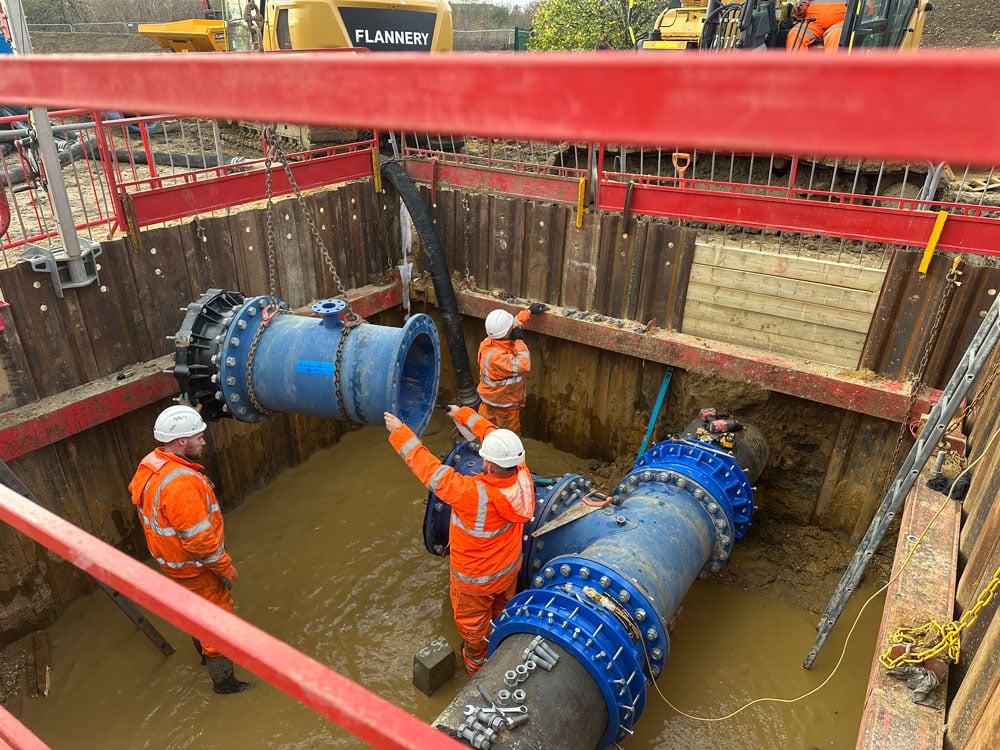
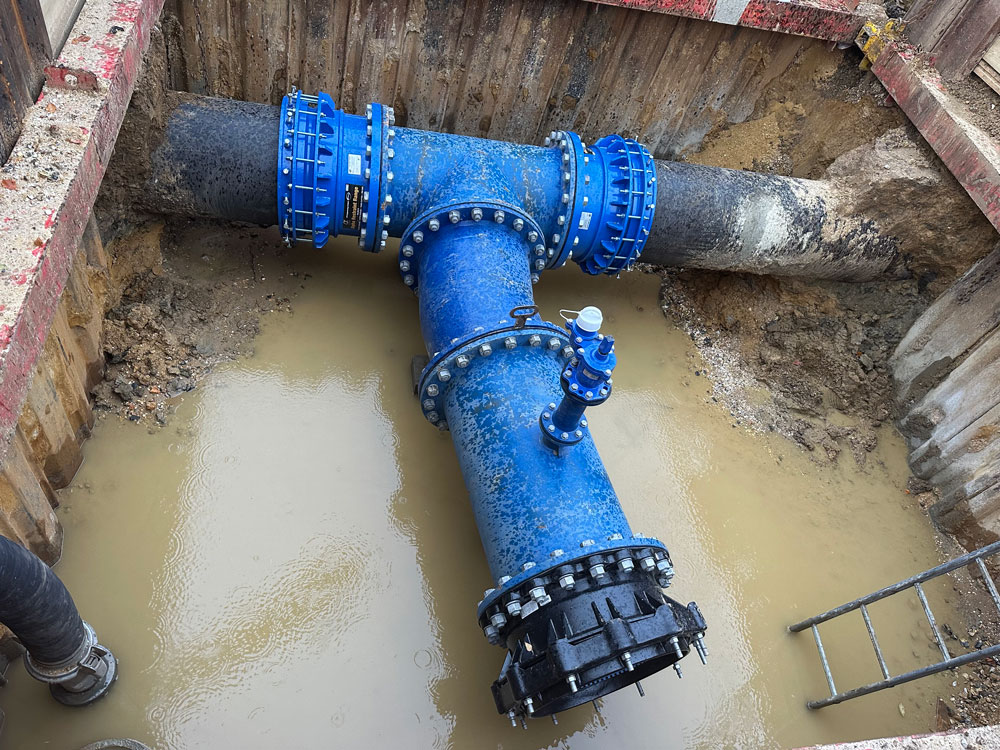
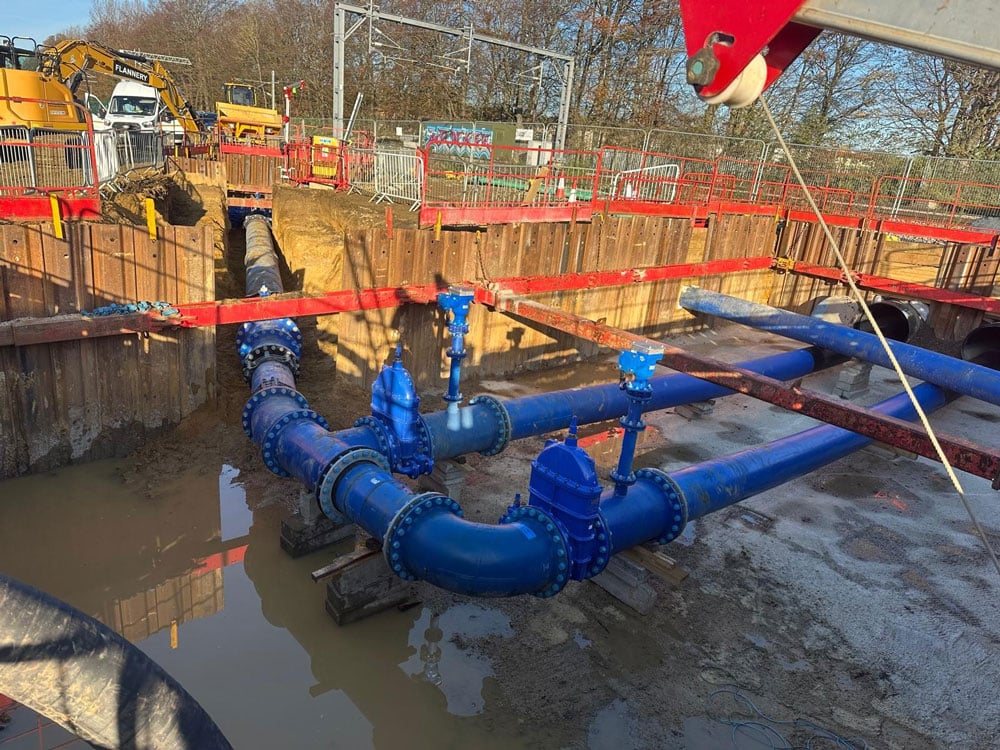
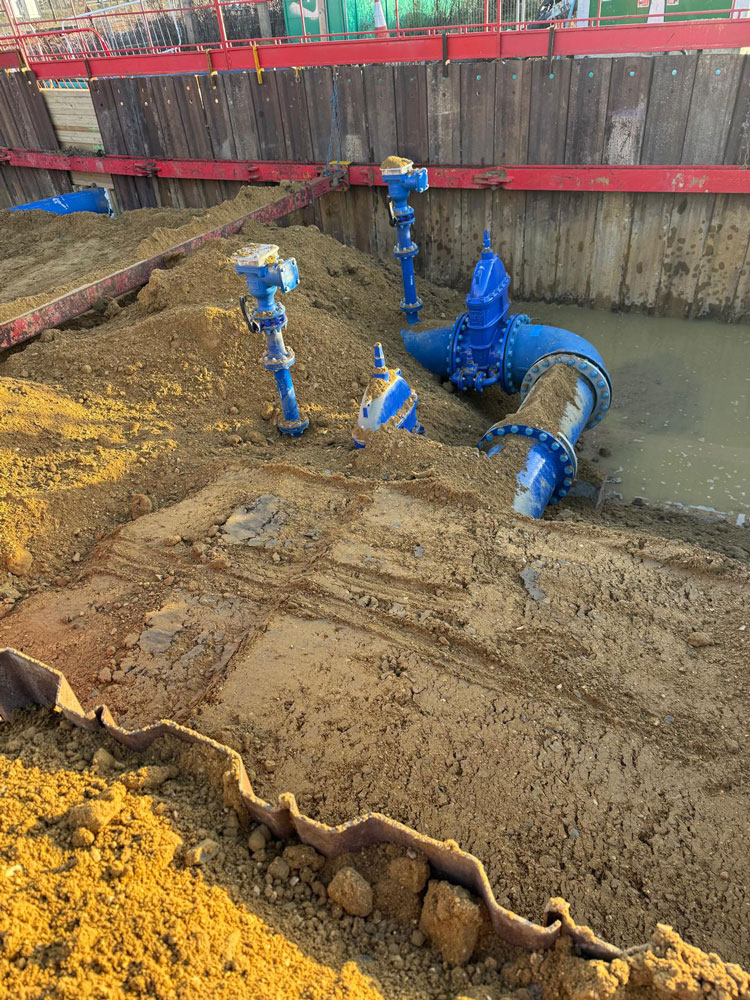
On the east side, a custom-designed and fabricated 3D Y-branch was installed to enable connection to, and blank-off of, the existing main. Following the installation of the twin 450mm PE mains through the ducts, manifold arrangements were constructed on both sides to reconnect into the 600mm ductile iron system. These manifolds comprised:
• Washouts
• Sluice valves
• T-pieces, bends and tapers.
On the west side, approximately 30 metres of 600mm ductile iron main, complete with anchor rubbers, was installed to reach the final connection point. Once installation was complete, the system underwent a full commissioning process. This included:
• Swabbing
• Pressure testing
• Chlorination
• Sampling.
The new mains were successfully connected and the existing main was decommissioned during a planned six-hour outage.
Site Challenges
The project presented several significant challenges arising from both ground conditions and the operational railway environment. The key challenges included:
• High groundwater levels
• Poor ground conditions
• Proximity to live railway tracks and overhead electric cables.
Overcoming the challenges
To manage groundwater issues, a dewatering system was implemented to lower water levels and maintain safe working conditions. A complex temporary works design ensured stability within the deep excavations throughout the construction phase.
Given the proximity to live rail infrastructure and overhead electrical equipment, additional safety controls were put in place. These included the use of height and slew restrictors on excavators, enhanced training for site personnel, permits to work, and clearly defined exclusion zones to minimise risk.
Benefits
A key innovation on the project was the 3D-designed, custom-fabricated Y-branch, which significantly simplified what would otherwise have been a complex connection to the existing 600mm main.
Sustainability
The project was delivered by a highly skilled workforce supported by effective on-site management. Sustainability was a key consideration throughout the works, with excavated materials reused and compacted for backfilling wherever possible. This approach reduced waste and minimised the need for imported materials.
“Communication and coordination throughout the works were highly effective, with the contractual arrangements working well across the duration of the project. We felt very confident in the temporary works design and site safety controls, which was essential given the Network Rail environment and Murphy’s CDM requirements. The project presented additional challenges due to ground conditions, requiring 24/7 de-watering and strict adherence to Environment Agency discharge conditions. Doocey’s de-watering arrangements were well designed, all conditions were fully met, and the works were delivered safely and efficiently. We would be more than happy to work with Doocey again on future infrastructure projects”.
Mike Sloan – Network Development Manager, Cambridge Water